On 15 October, Tsinghua University School of Economics and Management (SEM) and Philanthropy Asia Alliance (PAA) opened the inaugural Tsinghua-PAA Impact Summit in Beijing. Around 300 leaders from philanthropy, business, government and academia met under the theme Collaboration for Good: Leadership, Innovation, Scale. The programme set out how China responds to shared challenges through innovation and scale, and how others can adapt that experience.
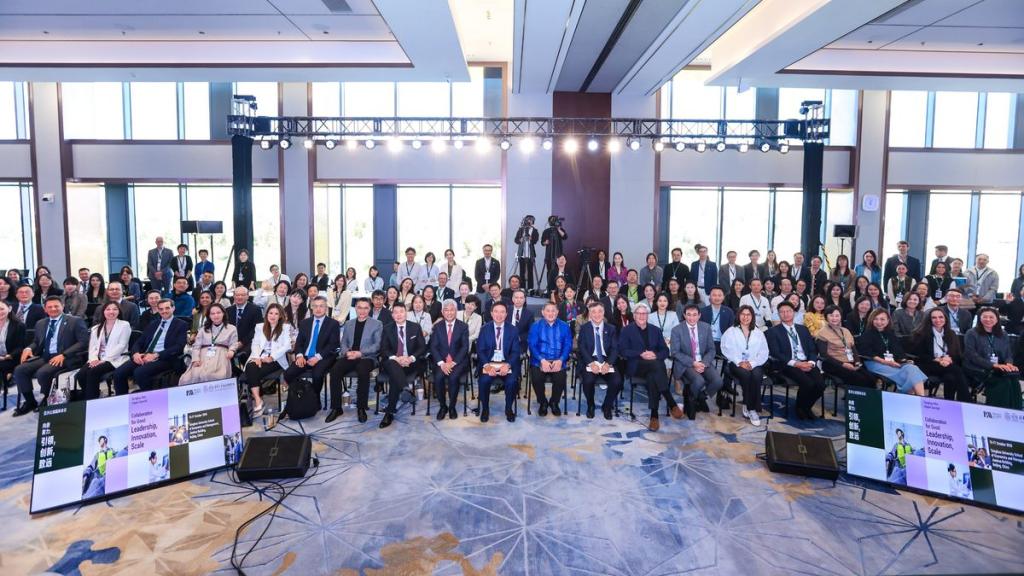
Philanthropy keeps ideas moving
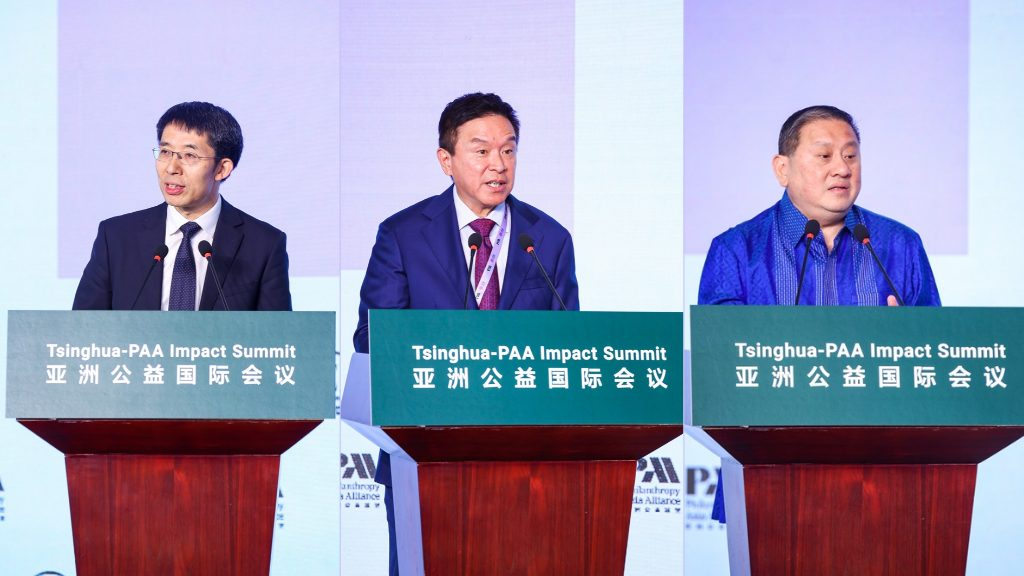
Opening remarks
Tsinghua University’s Professor Zeng Rong opened the Summit by calling philanthropy a common language across borders. PAA Chairman Edmund Koh added that philanthropy can keep good ideas moving while cooperation between governments takes shape over time. Singapore’s Ambassador to China, Peter Tan, expanded that view by describing how philanthropy acts as a new bridge between China and Singapore.
Putting people first
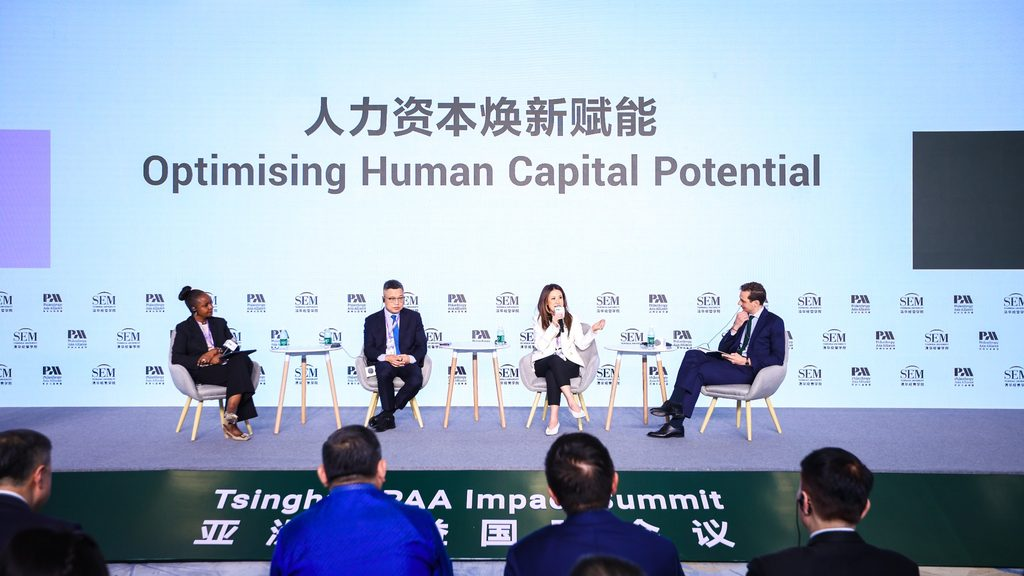
Panel on optimizing human capital potential
Tsinghua University’s Professor Yang Bin made the case for slow philanthropy, centred on people. He warned that AI hits entry-level roles hardest and urged funders to back first jobs that let young people learn and grow from mistakes. The first step on the career ladder can change shape, he argued, but it must not disappear. A panel tested youth programmes against reach, relevance and results. Philanthropy’s freedom to take risks emerged as its distinctive role in carrying new ideas forward.
Shared targets, smarter systems

Panel on advancing One Health at scale
A panel found that One Health work moves fastest when each country starts from its most pressing risk. The UK took that route on antimicrobial resistance, and joint human and animal targets cut antibiotic use by 28% in five years. In a keynote, Professor Wong Tien Yin from Tsinghua University said China can move straight to AI-native care.
Planning the whole system
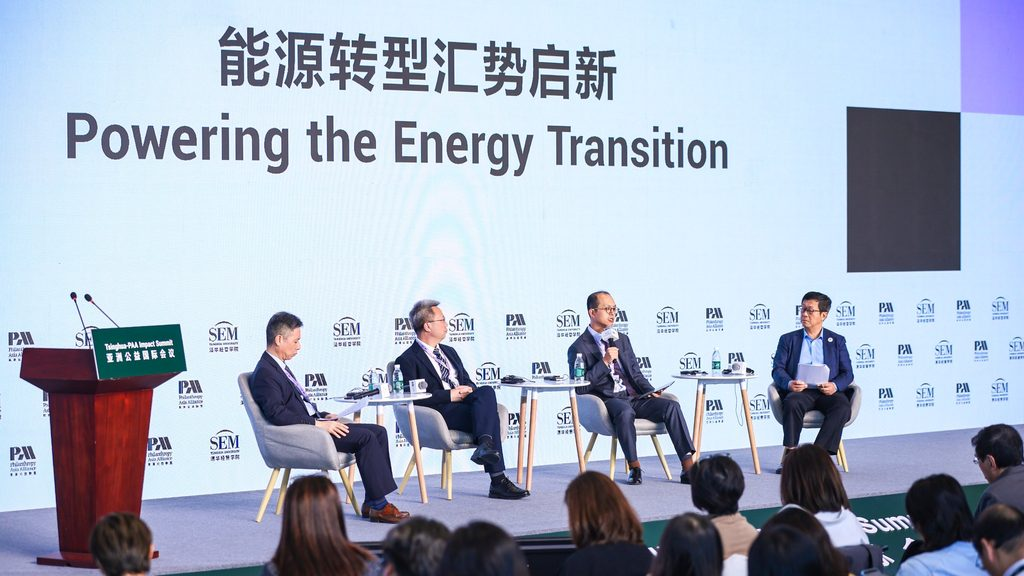
Panel on powering the energy transition
Renewables now account for almost half of China’s generation capacity. A panel traced that growth to planning generation, grids, demand and storage together. The next stage depends on turning green benefits into revenue and winning local support. Philanthropy can fund technical assistance and help pilots spread between regions, especially when partners work together from a project’s design stage.
Energy sets the limit
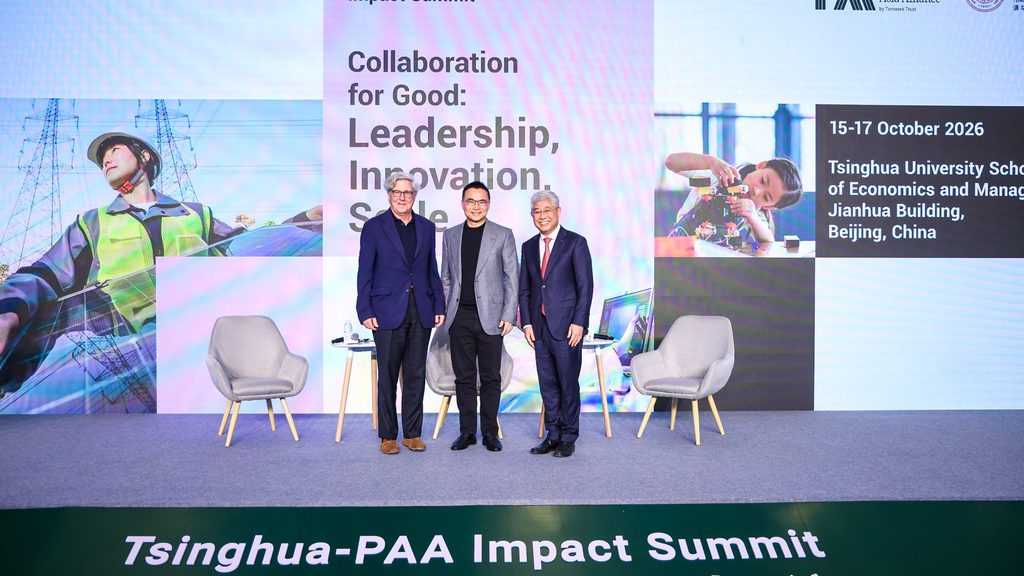
Fireside chat
Costs for renewable energy have fallen around 90% in 10 years. A fireside chat with Envision’s Zhang Lei and Tsinghua SEM Advisory Board Member John L. Thornton, moderated by Dean Bai Chong-En from Tsinghua SEM, argued that energy, more than chips, will be AI’s long-term constraint, so cheap clean power can lift prosperity widely. Wider energy access emerged as a joint task for every country.
Where philanthropy adds most
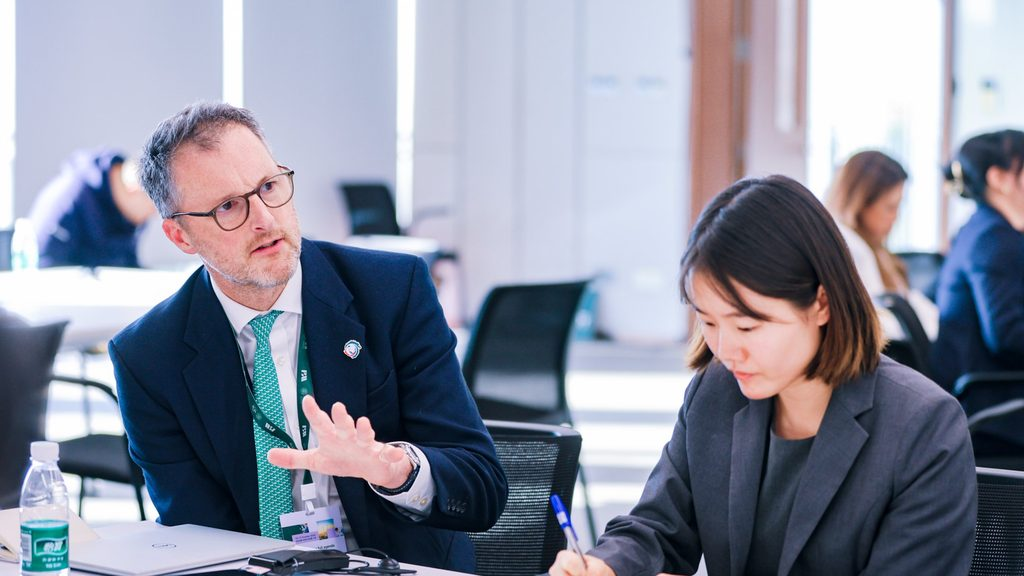
Afternoon sessions
Four afternoon breakouts, co-designed with AIIB, Dalberg and the Corporate Philanthropy Action Network, tested where philanthropic capital makes the biggest difference. The health session called for volume guarantees and long-term price commitments to keep medicines reaching lower-income countries as global health aid shrinks. The climate session found that China’s lessons travel best as principles, with local foundations linking national policy to communities. The inclusive development session saw philanthropy testing savings and pension schemes at scale for the two-thirds of workers worldwide in informal jobs. At Tech for Impact, the first paying customer emerged as the hardest hurdle for start-ups, a gap that philanthropy-funded pilots can close.
On 16-17, delegates joined site visits to see impact on the ground first-hand. Stops include Dami & Xiaomi, a Shenzhen-based impact start-up that uses RICE AI technology to bring early intervention to children with autism and learning difficulties. Delegates also visited a forest and wetland project that protects one of Beijing’s main sources of drinking water.
The summit was co-organsied by Tsinghua University Institute of Global Development and Tsinghua University Institute for Sustainable Social Value.