The 118th Tsinghua Forum was held at Tsinghua University School of Economics and Management (Tsinghua SEM) on June 25. Bai Chong-En, Vice Chair of the Academic Committee of Tsinghua University, Dean of Tsinghua University School of Economics and Management, Senior Professor of Arts and Humanities at Tsinghua University, hosted a themed dialogue titled Shaping Future Energy Systems with Zhang Lei, Founder and CEO of Envision Group. The dialogue coverd the future landscape and cutting-edge industrial practices driven by integrated artificial intelligence and new energy. Hosted by the Academic Committee of Tsinghua University and co-organized by Tsinghua SEM and the Tsinghua IGD, the event attracted nearly 200 faculty, students and alumni from Tsinghua SEM and multiple other schools across the university.
During the opening remarks Dean Bai noted that against the backdrop of worsening global climate change and explosive growth of AI technologies, the global energy system is undergoing unprecedented transformation with both historic opportunities and challenges. Building a safe, clean, abundant and inclusive future energy system has become a pivotal issue attracting worldwide attention. On behalf of the School, he extended a warm welcome to Zhang Lei and highlighted his remarkable achievements and global influence in green technology. As the leader of Envision Technology Group, Zhang Lei has long been deeply engaged in global energy transition and climate governance. In 2026, he was awarded the Annual President’s Prize by the UK Energy Institute, making him the first entrepreneur in the award’s history to receive this honor, in recognition of his outstanding leadership and transformative contributions to global energy transition.
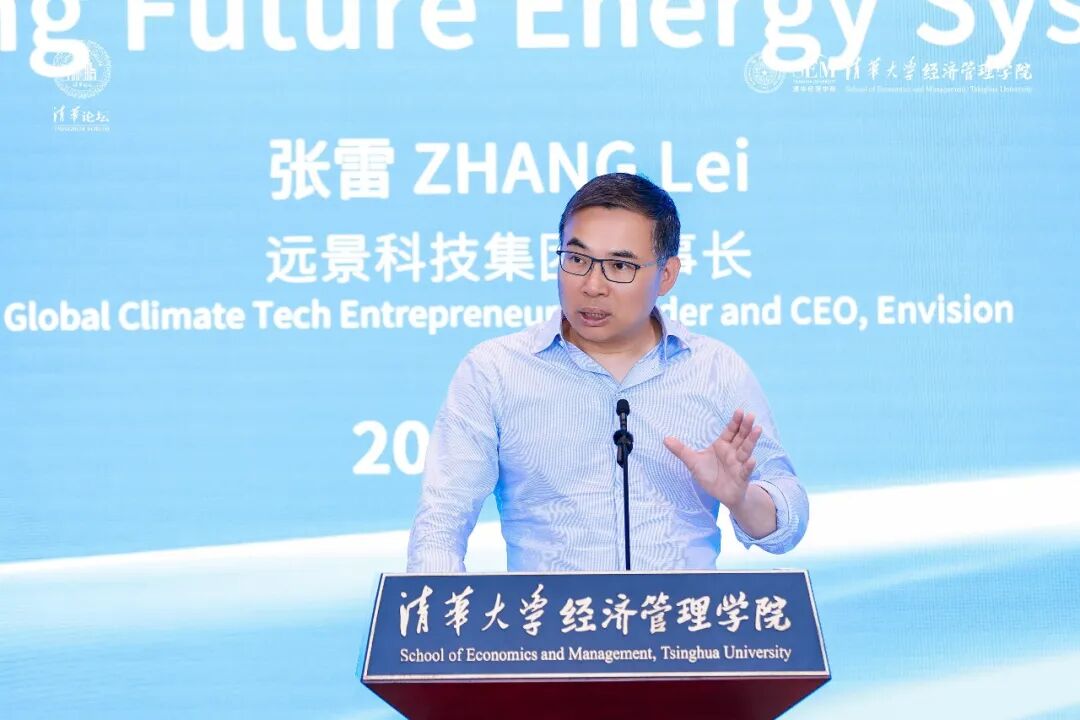
Keynote Speech by Zhang Lei
Before the dialogue session, Zhang Lei delivered a keynote speech, elaborating on the necessity of restructuring global energy systems from the perspective of sustainable human civilization, and stressing that energy has become a core pillar of social development. He drew a parallel between GPUs and the steam engines of the new industrial age: GPUs take electricity as input and generate intelligence as output, triggering exponential growth in global power demand.To address this transformative trend, he outlined the next-generation energy system defined by three core attributes: Infinite supply, Inexpensive operating costs, and Intelligent coordination. Leveraging physical AI foundation models covering meteorology and energy data, the system enables millisecond-level dispatching and coordinated smart grid operation for highly volatile renewable energy.
Zhang Lei stated that China holds the most promising conditions to build such a global energy system, thanks to its complete new energy industrial chain, robust engineering capacity and vast stretches of Gobi and desert land. Envision has already built a demonstration independent integrated generation-grid-load-storage power system in the Inner Mongolia Gobi Desert. The Group showcased its full-stack AI power system technologies and real-world deployments at Europe’s flagship tech exhibition VivaTech recently, and launched the Mission Gobi Initiative: the Group plans to build 5GW of green AI computing hubs across global Gobi and desert regions by 2030, creating a stable, eco-friendly and cost-effective new infrastructure for the AI era.
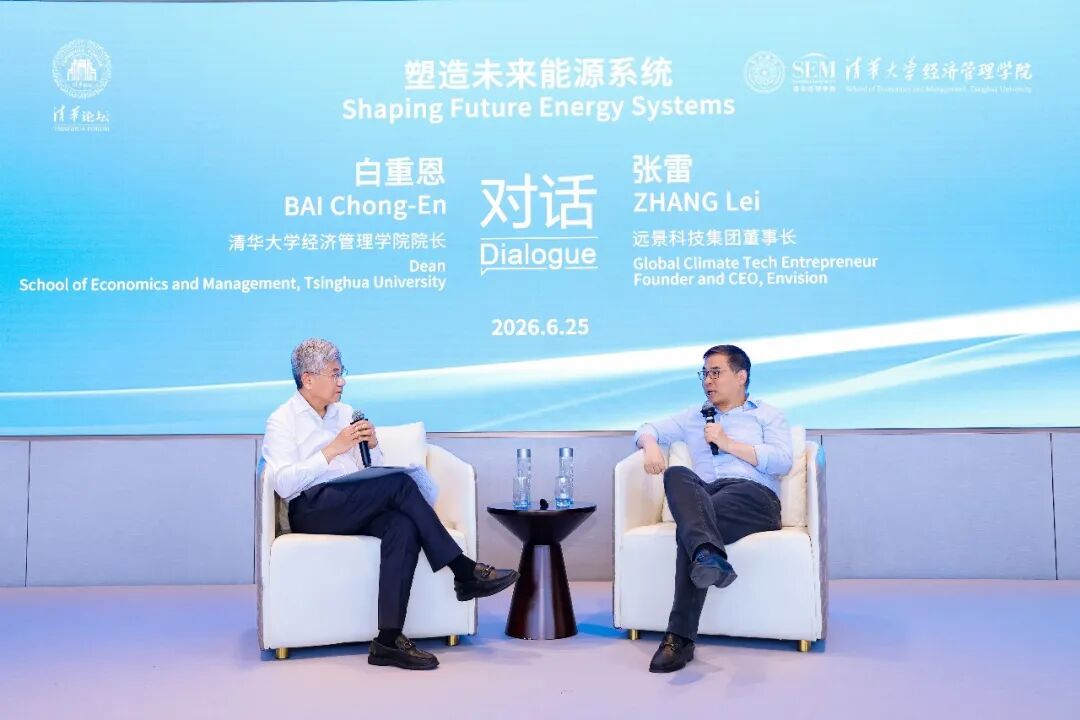
Dialogue between Bai Chong-En and Zhang Lei
During the dialogue, Bai Chong-En and Zhang Lei covered a wide range of topics including energy security, AI power infrastructure, the Mission Gobi Initiative, new growth opportunities for the Global South, and talent development frameworks for the AI era.Addressing geopolitical uncertainties stemming from geographically concentrated fossil fuel reserves, Zhang Lei argued that new energy equipment qualifies as "civilization-grade infrastructure": it requires only one-time upfront investment and delivers two decades of stable operation, fundamentally mitigating geopolitical supply risks.On the surging power consumption triggered by the AI boom, Zhang Lei commented that humanity has entered the inaugural era of skyrocketing energy demand under silicon-based civilization. He challenged the conventional linear mindset that frames energy merely as an underlying base layer for AI, arguing that AI hardware and operational processes are inherently intertwined with energy itself. The key bottleneck for today’s GPUs lies in power transmission and thermal management systems inside and outside chips, meaning energy professionals have become core builders of large-scale AI infrastructure.To prevent data centers from crowding out residential power supply and triggering localized "energy poverty", Zhang Lei introduced Envision’s "Gobi X" vision: constructing independent, 100% renewable-powered grids and computing clusters in desert regions, paired with hydrogen (ammonia) energy for long-duration seasonal energy storage, to realize full-chain integrated coordination of computing and power supply. Such desert-based projects cost merely 2% of space-based computing infrastructure, with outstanding scalability and replicability.
The discussion also coverd humanistic values amid the AI revolution. They agreed that in a future with abundant computing power and standardized data as tradable commodities, humanity should further nurture its unique strengths in perception, aesthetics and emotional experience.
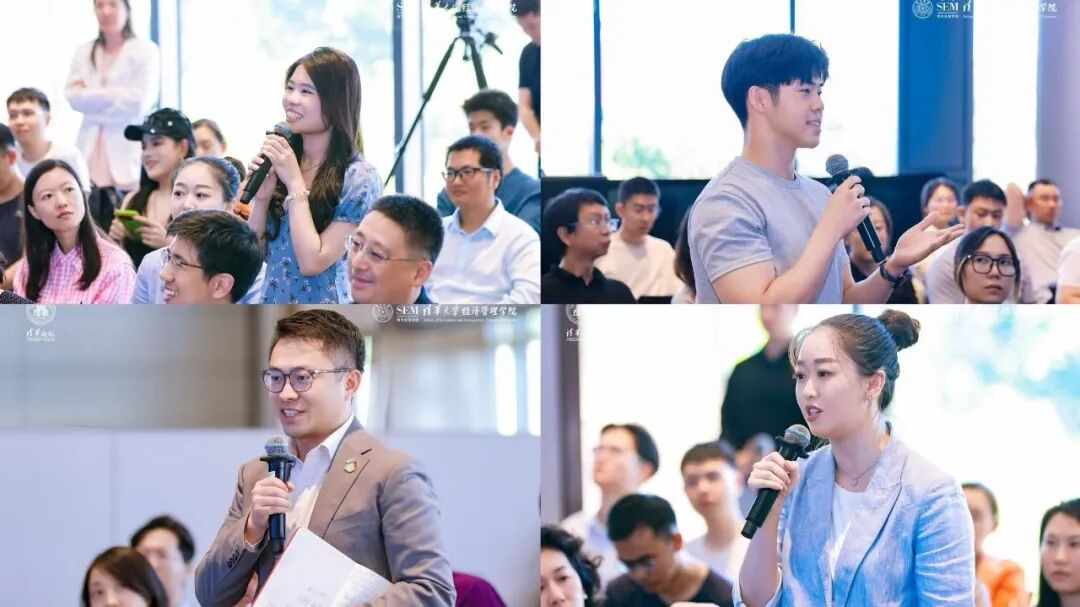
Q&A Interactive Session
In the Q&A segment, Zhang Lei exchanged views with attending faculty, students and alumni on industrial practices, emerging industry opportunities and pathways for energy transition. He encouraged young people to embrace the AI revolution and cultivate holistic, multi-dimensional systemic thinking.
At the end of the event, Dean Bai delivered closing remarks, noting that the forum broke the conventional framework of energy discussions and redefined the strategic value of energy from the height of human civilization. The integrated "Gobi X" solution offers a localized innovative path to resolve the conflict between computing power demand and power supply, and its core logic of systemic thinking, inclusive development and long-termism delivers profound insights for both academia and industry.
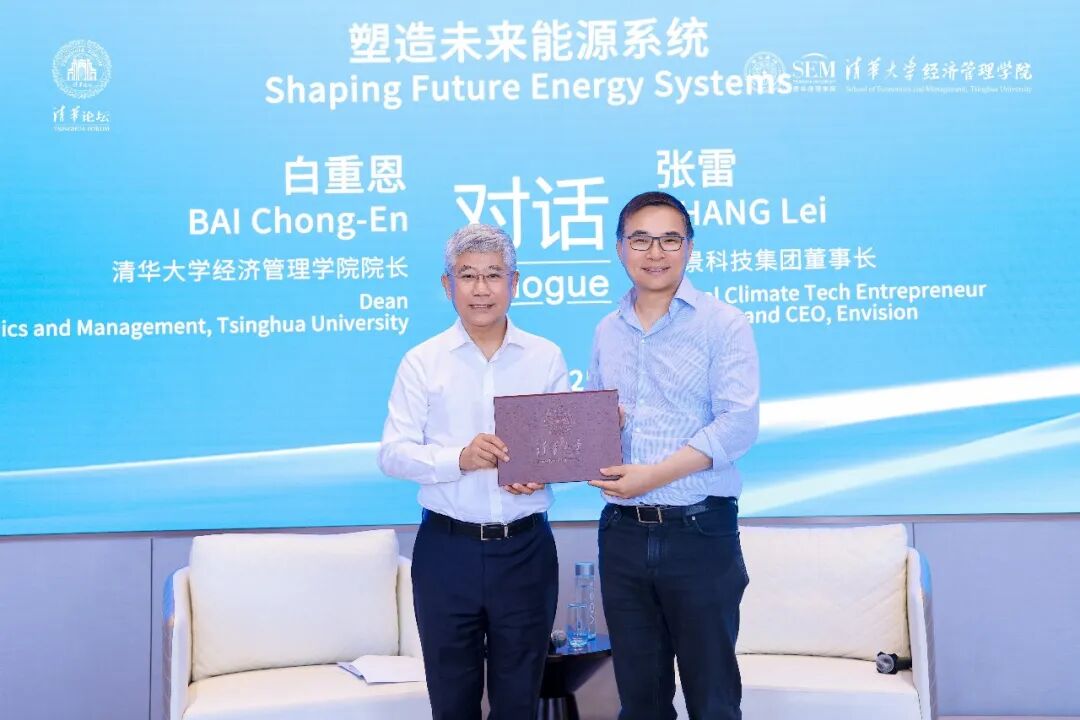
Presentation of Tsinghua Forum Certificate
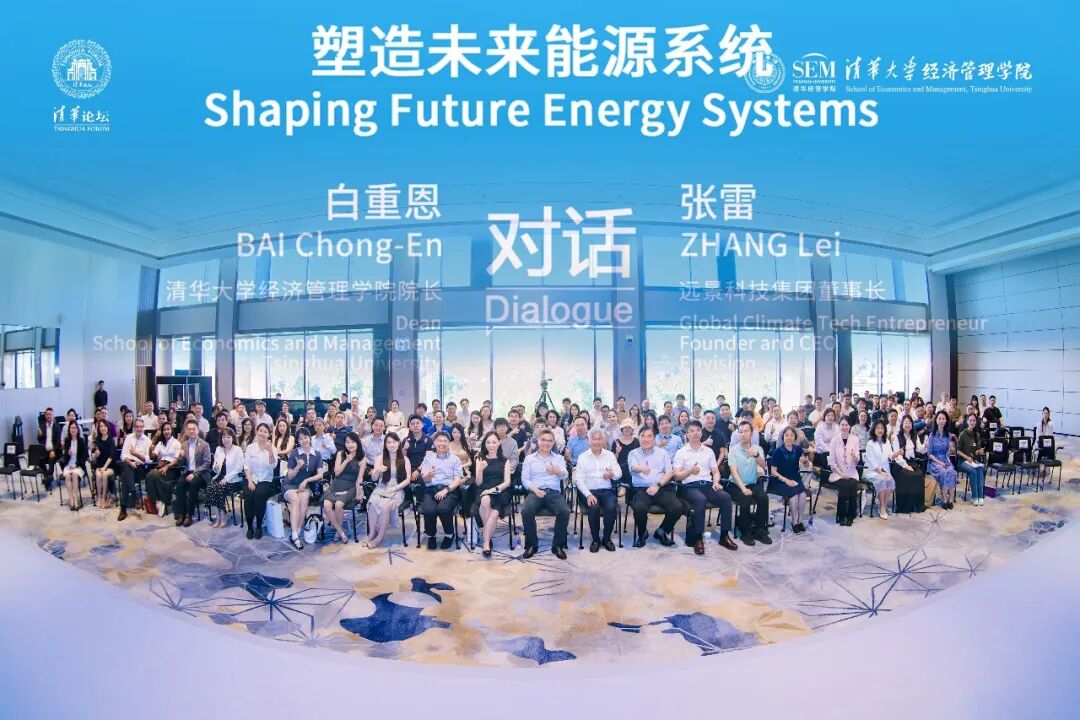
Group Photo
About Tsinghua Forum
The Tsinghua Forum is a high-level serial academic platform featuring strategic vision, cutting-edge insights and innovative thinking. Its mission is to stay at the forefront of global development, integrate science, technology and humanities, discuss strategic global issues, invite distinguished scholars, inspire academic innovation, cultivate creative talents, and advance global peace and progress. The forum covers a broad spectrum of critical topics concerning China and the world, spanning technology, economy, culture, ecology and more. Launched in October 2005, the forum held its 118th session on June 25, 2026.